A fall idea
Learn to read tarot cards
an evening · cozy inside · under $20 · Updated
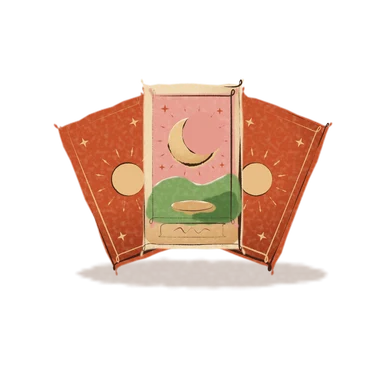
Get a beginner deck and start with a simple three-card spread: past, present, future. Treat it as a fun way to think things through, not a forecast.
- Time
- an evening
- Where
- cozy inside
- Who
- solo-friendly
- Cost
- under $20
What you need
- A tarot deck (Rider–Waite is the classic first one)
- The guidebook, or a free app
- A notebook for your readings
Tarot is a deck of 78 illustrated cards that people use as a way to slow down and think. You draw a few, look at the pictures, and ask what they bring up. It’s a creative, reflective ritual, not a forecast, and it suits a quiet October evening with a candle and a notebook.
What you need
- A tarot deck. The Rider-Waite-Smith deck is the classic first one, because its pictures are clear and most guides use it.
- A guidebook, or a free app, to look up what each card means
- A notebook and pen
- A quiet place and about half an hour
Beginner decks cost under $20 in many shops, and secondhand ones are cheaper. Choose one whose pictures you like, because you’ll be looking at them a lot.
How the deck is built
There are 78 cards in two groups.
- Major arcana. 22 cards with names like The Fool, The Lovers, The Moon and The Sun. They show big themes and turning points.
- Minor arcana. 56 cards in four suits: wands, cups, swords and pentacles. Each suit has cards numbered from ace to ten, plus four court cards.
The four suits are often tied to themes: wands to energy and action, cups to feelings, swords to thoughts and pentacles to work and daily life. You don’t need to memorise any of it. Start by learning the major arcana, and look the rest up as they come.
Read the pictures
Before you open the guidebook, look at the card. What’s happening? What colours are there? How does the person in it seem to feel? Tarot is a visual deck, and your first reaction is useful. Then read what the book says and see where the two meet.
If a card feels unfamiliar, don’t worry. The meanings are guides, not rules, and different decks and writers give slightly different readings.
Try a three-card spread
- Shuffle the deck while you think about a question or situation. Something simple works best: “What do I need to know about this week?”
- Draw three cards and lay them in a row, left to right.
- Read them as past, present and future, or as situation, challenge and next step.
- Look at each card, then read its meaning, then ask how it fits your question.
- Look at all three together. What story do they make?
Keep your question open rather than a yes or no. “What would help me with this?” gives you more to work with than “Will I get the job?”
Make a quiet space
Clear a small space, put your phone on silent and take a few breaths before you shuffle. It doesn’t have to be elaborate. The point is to give yourself a few unhurried minutes, which is why many people enjoy the ritual part as much as the cards.
Reversed cards
When a card comes out upside down, it’s called reversed. Some readers give reversed cards a different meaning, and some don’t use them at all. As a beginner, you can ignore reversals and turn every card upright.
Keep a tarot journal
This is the most useful habit. After each reading, write down:
- The date and your question
- The cards you drew
- What you noticed and what you think they mean
- How it feels a few days later
Over time you’ll see patterns in how you read and in what you ask. The notebook is the reason tarot is useful as a way of thinking things through.
Treat it as reflection
Tarot doesn’t tell you what will happen. What it does well is give you a prompt and some images to talk to yourself with. If a card makes you think of something you’ve been avoiding, that’s the value. You are the one doing the reading, and you can leave the rest.
If you find a reading unsettling, put the cards away and do something else. Tarot shouldn’t be used to make big decisions about health, money or relationships. For those, talk to a friend or a professional.
Make it a fall evening
Pull your cards on a dark evening with a candle (on a stable surface, away from your notebook) and a warm drink. It pairs well with a ghost story or a quiet night in, and it’s easy to do with a friend: pull a spread for each other’s questions and talk through the pictures.
Questions
What is the best tarot deck for beginners?
The Rider-Waite-Smith deck is the classic first choice, because each card has a clear picture and most guidebooks and apps are based on it. Any deck you find easy to look at is a good one.
How many cards are in a tarot deck?
78. There are 22 major arcana cards, which show big themes, and 56 minor arcana cards in four suits: wands, cups, swords and pentacles.
What is a simple tarot spread for beginners?
A three-card spread, read as past, present and future or as situation, challenge and next step. It's easy to learn and gives you enough to think about without overloading you.
Can tarot predict the future?
Tarot can't predict the future. Many people use it as a prompt for reflection, the way you might use a journal question, and take from the cards whatever helps them think.
Did it? Keep a stamp for it.In the Seasons app, you mark an idea done and it lands in your fall passport. Seasons opens on mobile in November.
Join the waitlist