A winter idea
Start a junk journal
an evening · cozy inside · under $20 · Updated
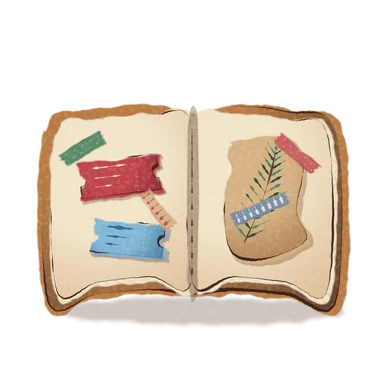
Glue in the paper bits of your winter: tickets, receipts, wrappers, cards, a pressed sprig of pine. Write a line next to each so you remember.
- Time
- an evening
- Where
- cozy inside
- Who
- solo-friendly
- Cost
- under $20
What you need
- A notebook with thick pages
- A glue stick and tape
- The scraps you've been saving
A junk journal is a notebook where you glue in the small paper bits of your days, and write a line beside each one. It is a scrapbook without the pressure: nothing has to match or look neat. Over a season, the page of a coffee sleeve, a ticket stub and a pressed sprig of pine turn into a record of what the weeks were like.
Starting out
Pick a notebook with thick pages, because glue and paper make thin ones buckle. A plain sketchbook or a notebook you already own is fine. You don’t need to start on page one, and you don’t need to fill it in order.
Start a small pile of scraps in a drawer or an envelope, and add to it as you go. Winter is a good season for this, because there is time indoors and the holidays bring cards, wrapping paper and tags.
What to collect, beyond the list
- Tickets and receipts from films, markets, trains and cafes.
- Cards and tags, wrapping paper offcuts and ribbon scraps.
- Wrappers and labels from tea bags, chocolate or favourite food.
- Handwritten notes and lists.
- Pressed sprigs of pine or dried leaves, as long as they are completely dry and flat.
- Photos you printed, or small magazine cuttings.
Glue in only flat, dry things. Skip anything damp, oily or sharp.
How to start a junk journal
- Sort your scraps onto the table and spread them out. Choose the ones that mean something.
- Pick a page and put a few pieces on it without glue first, moving them around until they feel right.
- Glue them down with a glue stick, pressing from the centre outward. Overlap the edges, and let a few stick out.
- Layer a small piece on top of a bigger one. Tape works well for fragile paper.
- Write a line next to each item: what it was, who you were with, how the day felt. Date it.
- Add small touches if you like: washi tape, a stamp, a doodle or a drawn border.
- Leave it open for a few minutes so the glue can dry before you close the book, then press it under something heavy overnight if the pages start to bulk.
Page ideas
- One day. Tape everything from a single outing, then write what happened.
- A list. Five good things from this week, each next to a scrap.
- A map. Draw a rough map of a trip and glue the tickets on the route.
- A colour page. Gather scraps in one colour, such as red or gold, and make a collage.
- A pocket. Fold a piece of paper into an envelope and glue it to the page to hold loose bits.
- A recipe. Glue in a recipe you tried and note how it turned out.
What goes wrong
- The pages buckle. Too much glue. Use a thin layer, and press the book under something heavy overnight.
- It is too bulky to close. Tear out a page or two, or add an elastic band around the cover.
- It looks messy. That is the point. If it bothers you, pick a simpler layout next time.
- Nothing to write. One line is enough: where you were, who with, what you ate.
- Things fall out. Use tape instead of glue for thick pieces, or put them in a pocket.
Keeping it going
Keep the notebook, glue and a few scraps somewhere you can reach them. Add to it once a week, or after any day worth remembering. In a few months, flicking back through is the reward.
Where to find scraps
Check coat pockets, bags and the bottom of a drawer. Ask friends for old cards and tickets, and save the packaging from things you liked. A small envelope or folder keeps loose scraps from getting lost, and you can sort them by month. Anything you can’t glue, such as a bulky keepsake, can be photographed and printed small instead.
Make it a winter evening
Spend an evening with a hot drink and a pile of scraps, and start with the most recent. Next time you go to a museum or a Christmas market, keep the ticket and add it to the journal that night.
Questions
What is a junk journal?
A junk journal is a notebook filled with scraps of paper and small keepsakes, such as tickets, wrappers, cards and pressed leaves, plus a few words. It is a scrapbook that doesn't need to look perfect.
What do I put in a junk journal?
Anything flat and paper-like that reminds you of a moment: receipts, tickets, tags, stamps, packaging, notes and magazine cuttings. Add a line about where it came from.
Do I need special supplies for a junk journal?
No. A notebook with thick pages, a glue stick and some tape are enough. Washi tape, stickers and stamps are extras you can add later.
How do I stop the pages from getting too bulky?
Glue in flat items, and tear out a page next to a thick one to make room. Don't glue in anything wet or very thick, and let each page dry before you close the book.
Did it? Keep a stamp for it.In the Seasons app, you mark an idea done and it lands in your winter passport. Seasons opens on mobile in November.
Join the waitlist