A winter idea
Find Orion in the winter sky
10 minutes · outdoors · free · Updated
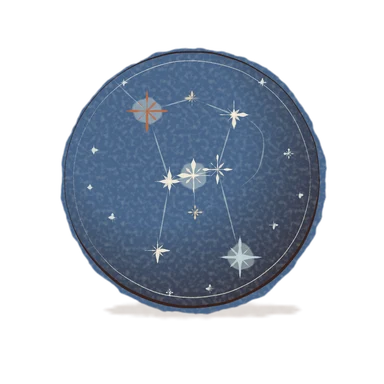
Orion is the easiest constellation to find, and it's up all winter. After dark, face south and look for three bright stars in a short, straight line: that's his belt.
- Time
- 10 minutes
- Where
- outdoors
- Who
- solo-friendly
- Cost
- free
What you need
- A clear night
- Your coat
- A sky app, if you want to check
Orion is the easiest constellation to find, and it’s up all winter. You don’t need a telescope, a dark sky or any experience. You need a clear night, ten minutes and the habit of looking up. The three stars of Orion’s belt do most of the work for you.
When and where to look
In the northern hemisphere, Orion is high in the evening sky in winter. On a clear night after dark, face south and look for a group of bright stars that makes a rough hourglass. In the middle of that shape, three stars sit in a short, straight line. That is the belt.
A few things make it easier:
- A clear sky. Check the forecast for cloud cover before you head out.
- A view to the south. A backyard, a balcony, a parking lot or a park all work, as long as no big buildings or trees block it.
- Away from the brightest lights. You don’t need a remote spot, but stepping away from a street light helps.
- A few minutes outside. Your eyes need time to adjust, and more stars appear the longer you wait.
Winter dark comes early, so you can do this before dinner and be warm again by eight.
In the southern hemisphere Orion is visible too, but he appears upside down compared with the northern sky and stands in the northern part of the sky.
What to bring
- A coat, a hat and gloves. Standing still on a clear night feels colder than you expect.
- A sky app on your phone, to check what you’re looking at. Turn the brightness down so it doesn’t spoil your night vision.
- Binoculars, if you have them. Even a small pair adds a lot around the middle of the constellation.
How to find it
- Go outside and give your eyes a few minutes.
- Face south and look about halfway up the sky for three bright stars in a short, straight line.
- Name them. The three stars of the belt are Alnitak, Alnilam and Mintaka.
- Look above the belt for a bright, reddish star. That is Betelgeuse, one of Orion’s shoulders.
- Look below for a bright blue-white star. That is Rigel, one of his feet.
- Join them up in your mind: two shoulders, two feet and the belt in the middle. Many people see a hunter.
- Below the belt, a line of fainter stars hangs down. That is his sword. With binoculars, the middle one looks fuzzy: that is the Orion Nebula, a cloud of gas where stars are forming.
Once you know the belt, you can use it as a pointer. Follow the line of the three stars down and to one side, and you reach Sirius, the brightest star in the night sky.
A little more to look for
Once you have the belt, try noticing colour. Betelgeuse looks warm and orange-red, while Rigel looks cool and blue-white. Stars have different temperatures, and your eyes can tell, especially if you look for a minute or two without rushing.
What goes wrong
- Cloud covers it. Try again the next night. Winter skies change fast.
- The belt looks faint. Give your eyes ten minutes to adjust, and step out of direct light.
- You can’t tell which stars are which. Use the app to confirm, then put it away and look again with your own eyes.
- You’re cold. Keep it short. Ten minutes is the plan, and you can go inside and look again later.
- Trees or buildings block the south. Move a few steps. A park or an open parking lot usually fixes it.
After you find it
Orion comes back every clear night through winter, so you can make it a small habit. Look for it when you take the trash out, or on the walk home. Once you’ve found the belt a couple of times, you won’t forget it, and you can show a friend.
Make it a winter evening
Orion works well as the end of something warmer. Eat dinner early, then step outside before you settle in. Or look up when you stop for a thermos on a full moon walk. If you want more of the night sky, a winter hike with a clear view is a good place to start.
Questions
What are the three stars in Orion's belt?
They are Alnitak, Alnilam and Mintaka, which sit in a short, straight line. All three are bright, which is why the belt is so easy to spot.
When can you see Orion's belt?
In the northern hemisphere, Orion is high in the evening sky through winter. Earlier in the season he rises later, so you may catch him late at night or before dawn.
Which direction do I look to find Orion's belt?
In the northern hemisphere, face south in the evening and look about halfway up the sky. The three belt stars are in a short line near the middle of the constellation.
Can you see Orion's belt from the city?
Often, yes. The belt stars are bright enough to show through some light pollution, and so are the bright stars of Orion's shoulders and feet. You will see fewer faint stars, but the shape is still clear.
Did it? Keep a stamp for it.In the Seasons app, you mark an idea done and it lands in your winter passport. Seasons opens on mobile in November.
Join the waitlist