A winter idea
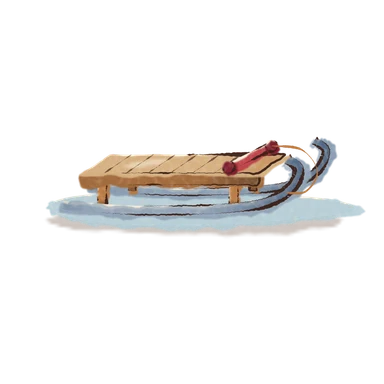
Go sledding
a half-day · outdoors · free · Updated
For a snowy day. Find a hill with a long, clear run-out at the bottom, away from roads and trees, and go feet first.
- Time
- a half-day
- Where
- outdoors
- Who
- a small group
- Cost
- free
What you need
- A sled, or a big piece of cardboard
- Waterproof pants and gloves
- Something hot for after
Sledding is the simplest winter day there is: a hill, some snow and something to sit on. It takes a few hours at most, costs nothing if you already have a sled or some cardboard, and works as well for one person as for six. What turns a good hill into a great one is mostly in the choosing.
When and where
Go in the day or two after a snowfall, while the snow is still packed and clean. Start in the morning, so the hill is quiet and you finish well before dark.
A good sledding hill has:
- A gentle to medium slope you can walk back up without much trouble.
- A long, flat, clear run-out at the bottom, so you can slow down by yourself.
- No trees, rocks, fences or benches along the way.
- No road, parking lot or water at the bottom.
- Few people, or at least a clear lane.
Many towns have a sledding hill in a park. Before you slide, walk the slope and look at what’s at the bottom. If you can’t tell the run-out is clear, choose another hill.
What to wear and bring
Beyond the list above:
- Boots with good grip. The walk back up is the real workout.
- A hat, and a spare pair of dry gloves.
- A thermos for afterwards.
- Cardboard, a plastic saucer or a sled. A flattened box is surprisingly quick.
How to do it
- Check the slope. Walk down the side first. Look for bumps, bare patches and anything buried.
- Look up and down. Make sure nobody is sliding or climbing in your lane.
- Sit upright, feet first. Hold the rope or the edges with both hands.
- Push off. Use your hands or lean forward a little to start.
- Steer. On a sled with a rope or handles, pull gently toward the side you want to turn. On a saucer or cardboard, lean, and drag a hand or heel on that side.
- Slow down. Drag your heels, or turn the sled sideways. Don’t try to stand up while it’s moving.
- Climb out of the way. Walk back up along the edge, not up the middle of the run, and keep an eye uphill.
Sledding with friends
A few habits keep a group day easy. Go down one at a time, and wait until the person before you has cleared the bottom. Don’t slide in a human train, linking sleds or arms, because it’s hard to steer and hard to stop. Don’t sit or stand at the bottom of the run to watch, since a sled can reach you quicker than you can move. If someone is new to it, let them take the first few runs from partway up the hill, so the first slide is a short, easy one.
If you’re sledding with children or younger siblings, go down with them on the same sled, or let them try the gentlest part of the slope first.
What goes wrong
- Too fast. Start from lower down the hill, or find a gentler one. Icy patches are much quicker than snow, and if the whole hill is icy, skip it for the day.
- The sled sticks. The snow’s too soft or dry. Try a steeper part, or stamp a track down first.
- Hands freezing. Wet gloves stop working. Bring a dry spare pair.
- Someone’s in the way. Wait. Sliding is better one at a time.
- Out of control. Bail out by rolling off to the side, away from the path of other sleds.
Don’t have snow?
Not everyone gets it. A short, dry grassy slope that’s free of rocks and clear of roads can work with cardboard, though it’s slower and more of a laugh than a thrill. Check the ground carefully first.
After sledding
Change out of wet clothes as soon as you can, because wet fabric makes you cold quickly. Something hot to drink is the obvious next step, and so is a warm shower.
Make it a winter day
Pack a thermos, bring a friend or two, and plan the day around the hill. On the way home, stop for a hot chocolate, or build a snowman at the bottom of the slope.
Questions
What is the best way to sit on a sled?
Sit upright, or lie on your back, with your feet pointing downhill. Going feet first means you can see the slope ahead and your feet, not your head, meet anything in the way. Avoid going head first.
What can you use if you don't have a sled?
A big piece of flattened cardboard, a plastic saucer, a snow tube or a plastic toboggan all work. Avoid anything with sharp edges or metal parts that can catch.
What is the best snow for sledding?
Packed snow, or a thin layer of fresh snow over a firm base, is fast. Very deep, soft snow slows you down and makes the climb back up tiring.
Is sledding safe?
It's reasonably safe on the right hill, sitting up and going feet first. Most problems come from hitting trees, roads, fences or other people, so choose a clear slope with a flat run-out at the bottom.
Did it? Keep a stamp for it.In the Seasons app, you mark an idea done and it lands in your winter passport. Seasons opens on mobile in November.
Join the waitlist