A fall idea
Knit or crochet a scarf
an evening · cozy inside · under $20 · Updated
A scarf is the classic first project: one long rectangle, nothing tricky. Chunky yarn and big needles or a big hook make it go fast.
- Time
- an evening
- Where
- cozy inside
- Who
- solo-friendly
- Cost
- under $20
What you need
- Chunky yarn, two or three balls
- Big needles or a big crochet hook
- A beginner video to follow
A scarf is the classic first project because it’s one long rectangle and nothing tricky happens. You learn two things, how to cast on and how to knit, and then you repeat the same row until it’s long enough. With chunky yarn and big needles it grows fast enough that you can see the progress in a single evening. You can do it on the sofa with a film on and nothing else to think about.
Choosing yarn and tools
The list above says chunky yarn, big needles or a big hook, and a beginner video. A few details help.
- Yarn. Pick a smooth yarn in a light or mid colour. Dark colours, fluffy yarns and very textured ones make it hard to see your stitches. Wool, or a wool blend, is warm. If you’re sensitive to wool, choose acrylic or cotton.
- How much. A chunky scarf takes around two or three balls, but it depends on the length and the yarn. The label tells you how many metres are in each ball.
- Needles. Use the size suggested on the yarn label. Wooden or bamboo needles grip the yarn, which helps beginners because stitches don’t slide off.
- Crochet. Use a hook the size the label suggests, or one size up.
- A video. Search for a beginner video for the stitch you’re doing, watch the cast-on once, then pause and follow along.
Knitting a scarf, step by step
- Make a slip knot and put it on the needle. This is your first stitch.
- Cast on. Using the video to guide you, add stitches until you have around 20 to 30, depending on how wide you want the scarf. Keep each one loose enough to slide the needle through.
- Knit the first row. Put the right needle through the front of the first stitch, wrap the yarn round, pull it through and slip the old stitch off. Repeat to the end of the row.
- Turn the work so the needle with the stitches is back in your left hand.
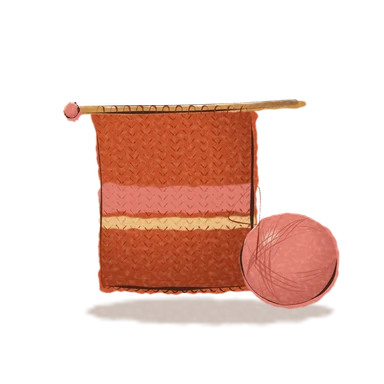
- Knit every row. This is garter stitch. It makes a bumpy, squishy fabric that lies flat and looks the same on both sides.
- Keep going until the scarf is as long as you want. Somewhere around 60 inches is a common length, longer if you like to wrap it.
- Cast off (also called binding off). Knit two stitches, lift the first over the second, and repeat until one stitch is left. Cut the yarn and pull the end through.
- Weave in the ends with a big needle, running them along the edge for a few stitches.
Crochet instead
If you prefer a hook, make a chain of the width you want, then work one row of single crochet or half double crochet into the chain. Turn, chain one or two, and work back across the row. Repeat. Crochet makes a thicker, less stretchy fabric than knitting, and a mistake is easy to undo because you only have one loop on the hook.
Why garter stitch
If you knit one row and purl the next, you get stockinette, which is smooth on one side and curls at the edges. That’s why a lot of first scarves roll into a tube. Garter stitch doesn’t curl, which makes it the safest choice for a first project.
Common mistakes
- The scarf gets wider or narrower. You’ve added or dropped a stitch, usually at the start of a row. Count your stitches every few rows.
- A hole or a loose loop. You’ve dropped a stitch. Pull the work back to it, or look up a video on how to pick it up with a crochet hook.
- Tight stitches. Hold the yarn more loosely and push the stitches down the needle as you go, so the needle can slide through them.
- Uneven edges. Don’t worry about them. They even out as you get used to it, and blocking (a gentle wash and flat dry) helps too.
- A mistake a long way back. Decide whether you can live with it. Many first scarves have a flaw, and it’s part of what makes the scarf yours.
Finishing and looking after it
Cut the yarn, weave in the ends and give it a gentle wash according to the yarn label. Wool is often best washed in cool water by hand and dried flat. Add fringe if you like: cut lengths of yarn, fold one in half, pull the loop through the end of the scarf and thread the tails through.
Make it a fall evening
Pick a quiet evening, put on a movie or a favourite series, and set yourself a small goal, like two inches before bed. If you’d rather do it with company, bring your yarn to a craft night and ask a friend who knits to help you cast on. By the first properly cold day, you’ll have something to wear.
Questions
What's the easiest stitch for a beginner scarf?
Garter stitch, which means knitting every row. It lies flat, doesn't curl at the edges and looks the same on both sides. In crochet, a row of single crochet or half double crochet does the same job.
How many stitches do I cast on for a scarf?
It depends on your yarn and needles. With chunky yarn, somewhere around 20 to 30 stitches makes a scarf a few inches wide. Cast on, knit a few rows and check the width, then start again if it's too wide or narrow.
How long should a scarf be?
A common length is around 60 inches (150 cm), which wraps once around the neck with the ends hanging. Make it longer if you like to wrap it twice. Make it as long as you like, because it's your scarf.
What size needles should I use for chunky yarn?
Check the label on the yarn. Chunky yarn usually calls for fairly large needles, often around 8 to 10 mm, and the label gives a suggested size. For a beginner, the needles can be a little bigger than the label says, because loose stitches are easier to see.
Can I finish a scarf in one evening?
A short, chunky one, yes, if you're comfortable with the stitch. Your first scarf will probably take a few evenings, and that's normal. Knitting gets faster as your hands learn the movement.
Did it? Keep a stamp for it.In the Seasons app, you mark an idea done and it lands in your fall passport. Seasons opens on mobile in November.
Join the waitlist