A fall idea
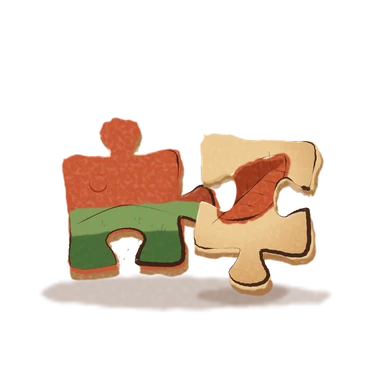
Do a puzzle
an evening · cozy inside · under $20 · Updated
Put something on to listen to, find the edge pieces first, and take your time. A 500-piece one fits in an evening.
- Time
- an evening
- Where
- cozy inside
- Who
- with one person
- Cost
- under $20
What you need
- A puzzle (500 pieces is a good start)
- A table you won't need for a while
- A podcast or playlist
A puzzle is one of the few things you can do for hours that needs nothing from you. Put something on to listen to, tip the pieces out and start. A 500-piece puzzle fits in an evening, and it’s even better with a friend sitting across the table.
Choose the puzzle
For a first one, or one in a long time, choose 500 pieces. It’s big enough to feel like a project and small enough to finish. Pick a picture with a lot of variety, such as a market stall, a shelf of books or a fall landscape with many colours. Pictures with big areas of one colour, like a clear sky or a calm lake, are much harder.
New puzzles are usually in the under $20 range. Thrift stores often have them too, and some libraries lend them. Second-hand ones sometimes have a piece missing, so check the box.
Set up your space
- A table you won’t need. Choose one that can stay as it is for the evening, or longer.
- Good light. A lamp over the table helps a lot, especially in the evening.
- A mat or board. If the table is needed again, you can slide the puzzle away.
- Something to listen to. A podcast, an audiobook or a fall playlist.
- Small bowls or trays for sorted pieces.
Step by step
- Turn all the pieces face up. Tip them out of the box and flip them over. It’s the dullest bit, so do it together.
- Keep the box lid in sight. The picture on it is your guide.
- Find the edge pieces. They have at least one straight side. Pull them out and set them to one side.
- Build the frame. Match the edges to the picture. You’ll have a border in no time.
- Sort the rest. Group the other pieces by colour or pattern into trays, like the green of a tree, a red roof and a blue sky.
- Work on one area at a time. Choose something with a clear detail, like a door or a flower, and build it outwards.
- Join areas to the frame. As the islands grow, they’ll meet.
- Finish the last pieces. The final few are very satisfying, so save them if someone else is helping.
Tips that help
- Look at the shape, not just the colour. Pieces with a similar shape, like two tabs and two gaps, often go in the same kind of place.
- Try pieces in different directions. Rotating a piece is often what makes it fit.
- Take a break and come back. After a cup of tea, a piece you couldn’t find is suddenly obvious.
- Don’t force pieces. If it doesn’t slot in easily, it isn’t the right one.
- Work in small sections. Don’t try to see the whole picture at once.
If you get stuck
- A big area of one colour. Sort the pieces by their shape and try them one by one.
- Pieces that look the same. Take a short break, or work on another part of the picture.
- A missing piece. Check under the table and in the box. If it’s really gone, leave the gap or make a replacement from card.
When it’s done
You can leave it on the table for a day or two to admire it. If you want to keep it, puzzle glue from a craft store holds the pieces together so it can be framed, but it’s fine to break it up and pass it on to a friend, or donate it so someone else gets to do it.
Doing it with someone
A puzzle is a good thing to do with a friend, a sibling or a partner, because you can talk while you work. Each of you can take a section of the picture, or one of you can sort while the other builds. The last piece is the most satisfying one to place, so it is nice to hand it to whoever is helping.
Choosing a second puzzle
If you enjoy it, try a larger one next, such as 750 or 1,000 pieces, which takes a weekend or longer. Many people like puzzles with a fall theme at this time of year, such as a farm stand, a forest path or a library. A good puzzle has clear, interesting pieces, sturdy cardboard and pieces that fit together firmly.
Make it a fall evening
Clear a table, light a candle and make a hot drink. Ask a friend to come round to do it with you, or work on it alone with your favourite show on in the background. If you like, make hot cider to go with it.
Questions
What is the best way to start a jigsaw puzzle?
Turn all the pieces face up, find the edge pieces, which have a flat side, and build the frame first. Then sort the rest by colour or pattern and work on one area of the picture at a time.
How long does a 500-piece puzzle take?
For most people it takes a few hours, so it fits in an evening, but it depends on the picture and how many of you are working on it. Puzzles with big areas of sky, water or one colour are slower.
What size puzzle should a beginner choose?
500 pieces is a good start. It's big enough to feel like a project and small enough to finish in an evening. If you haven't done one for years, 300 pieces is a gentle way back in.
What if a puzzle piece is missing?
It happens, especially with second-hand puzzles. Check under the table and in the box first. If it's really gone, you can leave the gap, or cut a piece from card and colour it in to match.
How do I keep a puzzle safe if I can't finish it in one go?
Use a puzzle mat or a large board that you can slide under a bed or on a shelf. A mat that rolls up is useful for small spaces. Keep it away from pets and anywhere damp.
Did it? Keep a stamp for it.In the Seasons app, you mark an idea done and it lands in your fall passport. Seasons opens on mobile in November.
Join the waitlist