A fall idea
Take a pottery class
an evening · cozy inside · a small treat · Updated
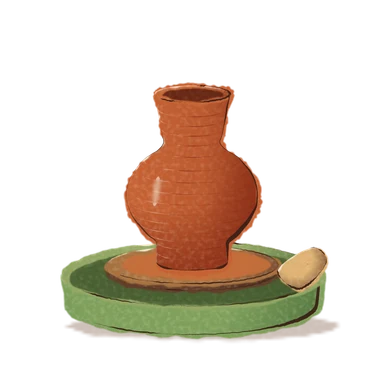
Book a beginner class or a one-night wheel session. Your first bowl will be lopsided, and it'll be the one you keep.
- Time
- an evening
- Where
- cozy inside
- Who
- with one person
- Cost
- a small treat
What you need
- A class booked ahead
- Clothes that can get muddy
- Short nails, if you can
A pottery class is one of the best things to do on the fall list if you want something that feels different from a normal evening. You sit down, someone hands you a lump of clay and for two hours you aren’t looking at a screen. It’s slightly messy, a little humbling and very absorbing. The cost is more than a free idea but still a small treat, and you can bring one friend.
Choose your kind of class
Beginner pottery comes in a few forms, and it helps to know which you’re booking.
- A one-night wheel session. You sit at a wheel and try to make a bowl or a cup. It’s the classic version. Expect a lot of help from the teacher.
- A handbuilding class. You make things by pinching, rolling and joining clay, with no wheel. This is easier for a first try, and good if you’d like to make something specific, like a small dish or a mug.
- A multi-week course. You come back over several weeks and work on your skills. It costs more but you get further.
- A date or group night. Some studios run evenings with a drink. These are more social and less technical.
The class description should say which one it is, and what you make.
Book it
The list says to book a class ahead, and it matters. Many studios fill up, especially at weekends and in fall.
- Search for pottery or ceramics studios near you.
- Read what the class includes: how long it is, how many people, what you make.
- Ask about firing and glazing. Is it in the price? How long until you can pick your piece up?
- Ask what to bring and wear.
- Check the cancellation policy.
- Book a seat for you, and one for a friend if you want company.
Prices differ by city and by class type, so check the studio’s own page. A single evening class is usually a modest cost.
What to wear and bring
- Old clothes you don’t mind getting muddy, or an apron.
- Short sleeves, or sleeves you can push up.
- Short nails, if you can, because they dig into the clay and are hard to clean. Rings and bracelets should come off.
- Hair tied back.
- A towel and a change of top, if you want to go straight on somewhere afterwards.
- Closed shoes are usually best.
Studios often have soap and sinks. Clay dries in a thin grey film on the skin, and it washes off with water.
What happens on the night
Every studio is different, but a beginner evening often goes like this.
- A short introduction. The teacher explains the clay, the tools and the plan.
- Wedging. You knead the clay to remove air bubbles and make it even.
- Making. On the wheel, you centre the clay, open it up and pull the walls. On a table, you pinch or coil.
- Trimming or smoothing. You tidy the shape with a tool, or the teacher helps you.
- Leaving it. You put your piece on a shelf. The studio takes care of drying.
Centring the clay on the wheel is the hardest part, and almost everyone struggles with it. Wet hands, steady elbows against your body and slow movement help. The teacher will often finish the first piece with you.
What happens afterwards
Your piece needs to dry slowly. After that, it’s fired in a kiln, which turns it from clay to ceramic. Then it’s glazed, and fired again. That’s why it takes a few weeks before you can collect it.
Many studios let you pick glaze colours at the start or when you come to collect your piece. Colours often look different after firing, so don’t be put off by a dull glaze. Ask the teacher for samples.
What to expect from yourself
Your first bowl will probably be uneven. The walls might be thick on one side, the rim might wobble, or the whole thing might collapse on the wheel. This happens to nearly everyone, and the teacher has seen it many times. That’s why the first piece is the one people keep.
Go in to enjoy the process rather than to make something perfect. You’ll find your hands start to understand the clay by the end of the night.
Common mistakes
- Using too much water. Clay turns to slop. Use a little at a time.
- Rushing. Slow, steady movements work best on the wheel.
- Making it too thin. Thin walls collapse or crack. Keep them thicker than you expect.
- Skipping questions. Ask the teacher anything. That’s what they’re there for.
- Booking too late. Reserve a spot in advance.
Make it a fall evening
Book a class for a weekday after work, or a Saturday evening, and go with a friend. Afterwards, have dinner, or a hot drink somewhere warm, and talk about whose bowl looks the strangest. In a few weeks, when it’s ready, you’ll have a small thing from this fall to use on a shelf, a desk or the kitchen table. If you’d rather work with clay at home, try clay pumpkins first.
Questions
What should I wear to a pottery class?
Clothes you don't mind getting muddy, with short sleeves or sleeves that roll up. Many studios provide aprons. Take off rings and bracelets, tie back long hair and keep your nails short, because clay gets under them.
Do I need experience for a beginner pottery class?
No. Beginner classes assume you've never touched clay. The teacher shows you each step and helps your hands. Your first pieces will usually be uneven, and that's expected.
Do I get to take my piece home?
Usually, but not the same night. Clay needs to dry, then be fired in a kiln, glazed and fired again, so it often takes a few weeks before you can collect it. Ask the studio how long it takes and whether firing and glaze are included.
Is a pottery wheel harder than handbuilding?
For most beginners, yes. The wheel takes practice to centre the clay and hold its shape. Handbuilding, like pinch pots and coil bowls, is more forgiving. A good studio will tell you what they teach.
Can I eat from something I made in a class?
Ask the studio. Whether a piece is safe for food depends on the clay and the glaze they use, so don't assume. Many studios will say which glazes are food-safe.
Did it? Keep a stamp for it.In the Seasons app, you mark an idea done and it lands in your fall passport. Seasons opens on mobile in November.
Join the waitlist