A winter idea
Photograph frost on a window
10 minutes · cozy inside · free · Updated
For a frosty morning. Look at a cold window early, before it warms up, and you'll see feathery patterns. Get close and shoot it against the light.
- Time
- 10 minutes
- Where
- cozy inside
- Who
- solo-friendly
- Cost
- free
What you need
- A frosty morning
- Your phone's camera
- An early alarm
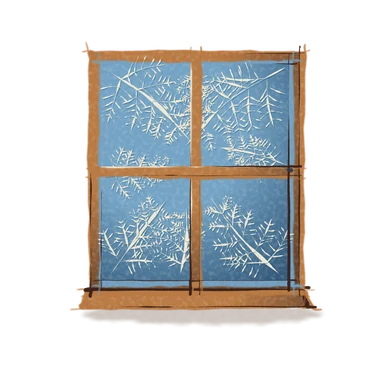
Frost on a window is one of winter’s quietest bits of art, and it’s gone by mid-morning. On a very cold night, water vapour freezes onto cold glass in feathery, fern-like patterns. All you need is an early alarm, a cold day and your phone. It takes ten minutes, and you can do it before your first coffee.
When and where
Frost needs three things: a cold night, a clear sky and some moisture in the air. Look at the forecast for a night that drops below freezing, ideally with little cloud and not much wind.
Then get up early. Frost is at its best around sunrise, and it fades as the sun and the room warm the glass. After a couple of hours it may be gone.
Where to look:
- Your own windows. Frost on the inside happens on cold glass in damp rooms. Single-pane windows frost more than double-glazed ones.
- Car windows and windshields. Frost forms on the outside, and the patterns can be lovely. Take your photo before you scrape.
- A shed, a greenhouse or a garage window. Unheated spaces get properly cold.
- A frosty yard. Frost also coats leaves, grass and fences, if the window gives you nothing.
If you don’t get freezing nights, this one has to wait. A trip to somewhere colder on a winter weekend is the way to see it.
What to bring
- Your phone, with a clean lens. Wipe it on your sleeve first.
- A coat and slippers or boots, since you’ll be standing near a cold window or outside
- Something to steady your phone, such as the window sill, a book or a small tripod
- A dark scarf or card, held behind the frost, can make the patterns stand out
- A warm drink for after
How to do it
- Set an alarm for just before or around sunrise, on a morning after a clear, cold night.
- Look at your windows. Choose the glass with the best patterns and the nicest light.
- Don’t breathe on it, and don’t touch the frost. Warmth and fingers will melt it.
- Get close. Fill the frame with the ice, so the patterns look like landscapes.
- Shoot against the light if you can, with the sun coming through the glass. Backlit frost glows.
- Tap on the ice to focus, then take several photos. Move a little each time.
- Try a few different angles, and take one wide shot with the whole window.
- Look at the best frame while you’re still there, and take another if needed.
What goes wrong
- There’s no frost. Check the forecast the night before. It needs to drop below freezing, and clear nights are best. Try the next cold morning.
- The photo is blurry. Rest your phone on the sill, and tap to focus on the ice, not the background.
- It’s all white and flat. Shoot from a lower angle against a dark background, or wait for the sun to light it from behind.
- The frost melts before you’re ready. Be ready before sunrise, and take your photos right away.
- You have a lot of condensation. Frost on the inside of your windows means damp air indoors. Wiping the glass and airing the room helps.
Why the patterns look like ferns
Frost crystals grow outward from tiny points on the glass, branching as they go. Scratches, dust and edges give them a start, so the patterns often begin at the corners and spread across the pane. That is why each window looks different, and why a close-up looks like a tiny forest.
Keep what you get
Pick your best photo and keep it as your keepsake. You can set it as your phone’s wallpaper for a few days, or print it small and pin it somewhere. If you take one each time it frosts, you’ll have a quiet collection by spring, and each one will be a little different.
Make it a winter morning
Make a hot drink, sit by the window and watch the frost go. It makes an easy start to a slow weekend. If you’d like a longer outing afterwards, a winter hike on a frosty morning is lovely, and it’s good to look at snowflakes after a snowfall too.
Questions
Why does frost form on the inside of a window?
Glass gets very cold overnight. Water vapour in the indoor air touches it and freezes straight into ice crystals. Damp rooms and single-pane windows are the most likely to frost, which is also a sign of condensation you may want to manage.
What is the best time to photograph frost on a window?
Early morning on a clear, cold day, soon after sunrise. The frost is thickest then, and the low sun lights it from behind. It starts to melt as the glass warms, so you have a short window.
Do I need a special camera for frost photos?
No. A phone camera works well. Zoom in a little or use its macro mode, tap to focus on the ice and take several shots. A cheap clip-on macro lens adds detail, but it's optional.
What if my windows never frost?
Modern double-glazed windows often don't, because the inner pane stays warmer. Look at a car windshield, a shed window or a gate early in the morning instead. Frost forms on any cold surface.
Did it? Keep a stamp for it.In the Seasons app, you mark an idea done and it lands in your winter passport. Seasons opens on mobile in November.
Join the waitlist