A fall idea
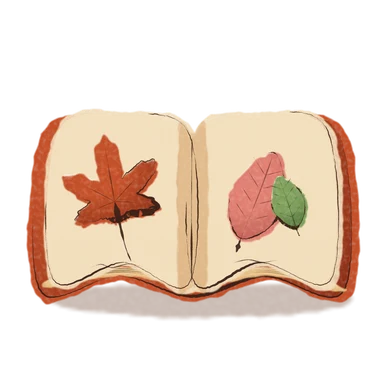
Collect and press leaves
an evening · cozy inside · free · Updated
Collect the brightest leaves you can find, then press them flat between paper under something heavy. They're ready in about a week.
- Time
- an evening
- Where
- cozy inside
- Who
- solo-friendly
- Cost
- free
What you need
- Leaves that are dry but not crumbly
- Parchment paper or newspaper
- A stack of heavy books
Pressing leaves is quiet and nearly free, and you end up with something you can use all year. You need some leaves, some paper and a stack of heavy books, then a week of waiting. It’s a good thing to do on a rainy evening after a walk.
Choose the leaves
Collect leaves on a dry day, ideally in the afternoon once any dew or rain has dried. Wet leaves go moldy when you press them.
- Pick leaves that are dry but not crumbly, as the catalogue says. If a leaf snaps when you bend it, it’s too dry.
- Choose flat, thin leaves. Maple, oak, ginkgo, birch, aspen and sweetgum press well. Thick, fleshy leaves hold moisture and take much longer.
- Look for good shape and colour. Pick leaves without holes, spots or curled edges, and look for ones with a stem still attached.
- Collect a few more than you need, because some will tear or fade.
- Take them from the ground. Fresh-fallen leaves are enough, and in parks and nature reserves, picking from trees or plants is often not allowed. Check local rules.
- Be careful with unknown plants. Poison ivy turns bright red in fall and is easy to mistake for a pretty leaf. If you aren’t sure what a leaf is, leave it, and wash your hands after handling anything you don’t know.
Press them
- Wipe the leaves gently with a dry cloth or paper towel to remove dirt and bugs. Don’t wash them.
- Open a heavy book or lay out a sheet of parchment paper or newspaper. Newspaper absorbs moisture, which helps. Parchment keeps ink off the leaves.
- Arrange the leaves flat, with room between them so they don’t touch. Straighten curled edges with a fingertip.
- Cover them with another sheet of paper, then close the book. If you’re using loose paper, stack another layer on top.
- Weigh it down. Put the book at the bottom of a stack of other heavy books, or put a board and a few weights on top.
- Leave it alone for a few days. Then check. If you see damp patches, swap the paper for fresh, dry sheets and put the weight back.
- Wait about a week. The leaves are ready when they feel dry and papery all the way through.
Leave the leaves in the press until they’re fully dry. If you take them out too soon, they curl and go limp.
Faster ways
If you can’t wait a week:
- Iron them. Put leaves between two sheets of parchment paper or a thin cloth, and press with a warm, dry iron on a low setting. Don’t use steam. Check often and don’t leave it on one spot, as leaves can scorch.
- Use a flower press, which is a stack of paper and boards tightened with screws. It’s cheap, and it’s neat if you press often.
Both give a good result, but a slow press under books usually keeps the most colour and the flattest finish.
What goes wrong
- The leaves went brown. Some colour change is normal, and reds often darken. Starting with fresh leaves and pressing them quickly helps.
- They went moldy. They were wet, or the paper was damp. Start again with dry leaves, and change the paper after a day or two.
- They curled. The leaves were too dry before you started, or the weight wasn’t heavy enough.
- They stuck to the paper. Use parchment instead of newspaper, and peel them off gently.
- They crumbled. They were too brittle to begin with. Pick fresher leaves next time.
What to do with them
Pressed leaves are fragile, so handle them with tweezers or by the stem.
- Frame them. Put leaves between two sheets of glass, or in a simple frame, for a wall piece.
- Make bookmarks or cards. Glue a leaf to card stock and cover it with clear contact paper.
- Decorate a journal. Glue them in with a thin layer of glue, working from the center outward.
- Use them as table decoration, scattered across a table or on a place card for a fall dinner.
- Paint on them. A pressed leaf makes a good base for painting leaves.
- Tuck them into letters or presents.
Keep them out of direct sunlight, which fades the colour, and store spares in a book or a flat box.
Make it a fall evening
Take a short walk before dinner, and collect a pocketful. Put on a playlist, press them while a pot of something warm simmers, and weigh the stack down with your heaviest books. By the time they’re ready, the colours outside will have changed. If you want a pile of leaves for jumping first, a leaf pile gives you plenty to choose from.
Questions
How long does it take to press leaves?
About a week under heavy books, sometimes a little longer for thick leaves. They're ready when they feel completely dry and papery, with no cool or damp patches. If you're not sure, leave them for a few more days.
What are the best leaves for pressing?
Thin, flat leaves in good shape: maple, oak, ginkgo, birch, aspen and similar. Pick them dry, and fresh enough to still have their colour. Avoid leaves that are already brittle, curled, spotted or wet.
Do pressed leaves keep their colour?
Mostly, for a while. Colours soften and fade over time, and direct sunlight speeds it up. Keep pressed leaves in a book, a drawer or a frame out of the sun, and expect reds to darken to brown over months.
Can I press leaves without a book?
Yes. Put leaves between two sheets of parchment paper or paper towel, and use any flat heavy weight, such as a stack of other books or a heavy board. For a quick version, press them under a warm, dry iron without steam, on a low setting.
Did it? Keep a stamp for it.In the Seasons app, you mark an idea done and it lands in your fall passport. Seasons opens on mobile in November.
Join the waitlist